Instead of practicing chords one by one, you're going to connect them into a chord progression. This is one of the biggest milestones for every beginner because it's the moment your practice starts to sound like actual music.
You don't need dozens of chords or advanced techniques to play something enjoyable. In fact, countless songs are built from just a handful of chords played in different orders.
Let's play your first progression!
What Is a Chord Progression?
A chord progression is simply a sequence of chords played one after another.
Think of it like forming sentences.
A single word has meaning, but putting several words together allows you to tell a story. Chords work the same way. One chord sounds nice on its own, but combining several chords creates movement, emotion, and the musical foundation for a song.
You'll soon discover that many of your favorite songs reuse the same chord progressions. That's why learning a few basic chords opens the door to hundreds of songs.
Meet Your Three Chords
For today's lesson, we'll use three beginner-friendly chords:
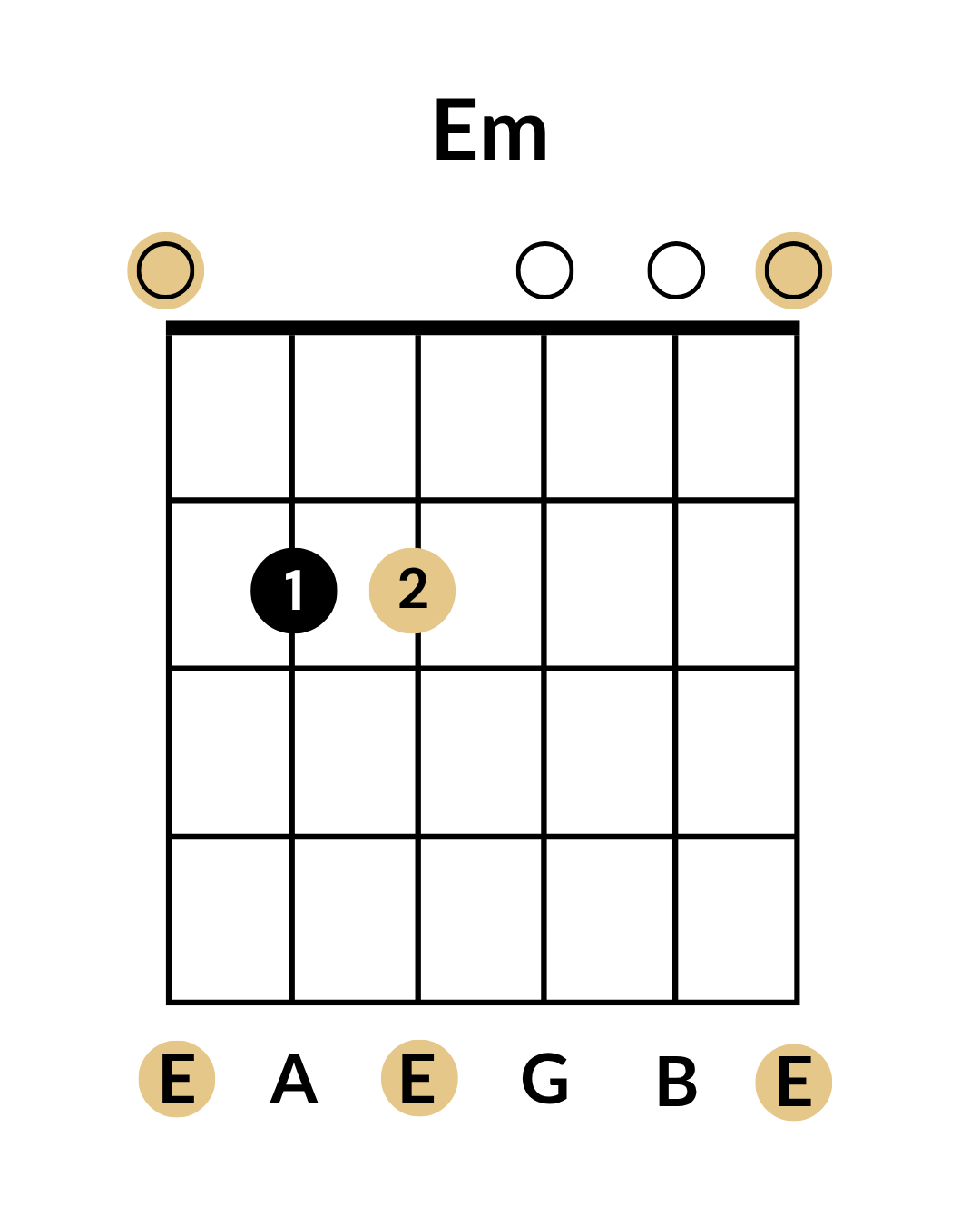
One of the easiest chords to learn. It has a warm, rich sound and only requires two fingers.
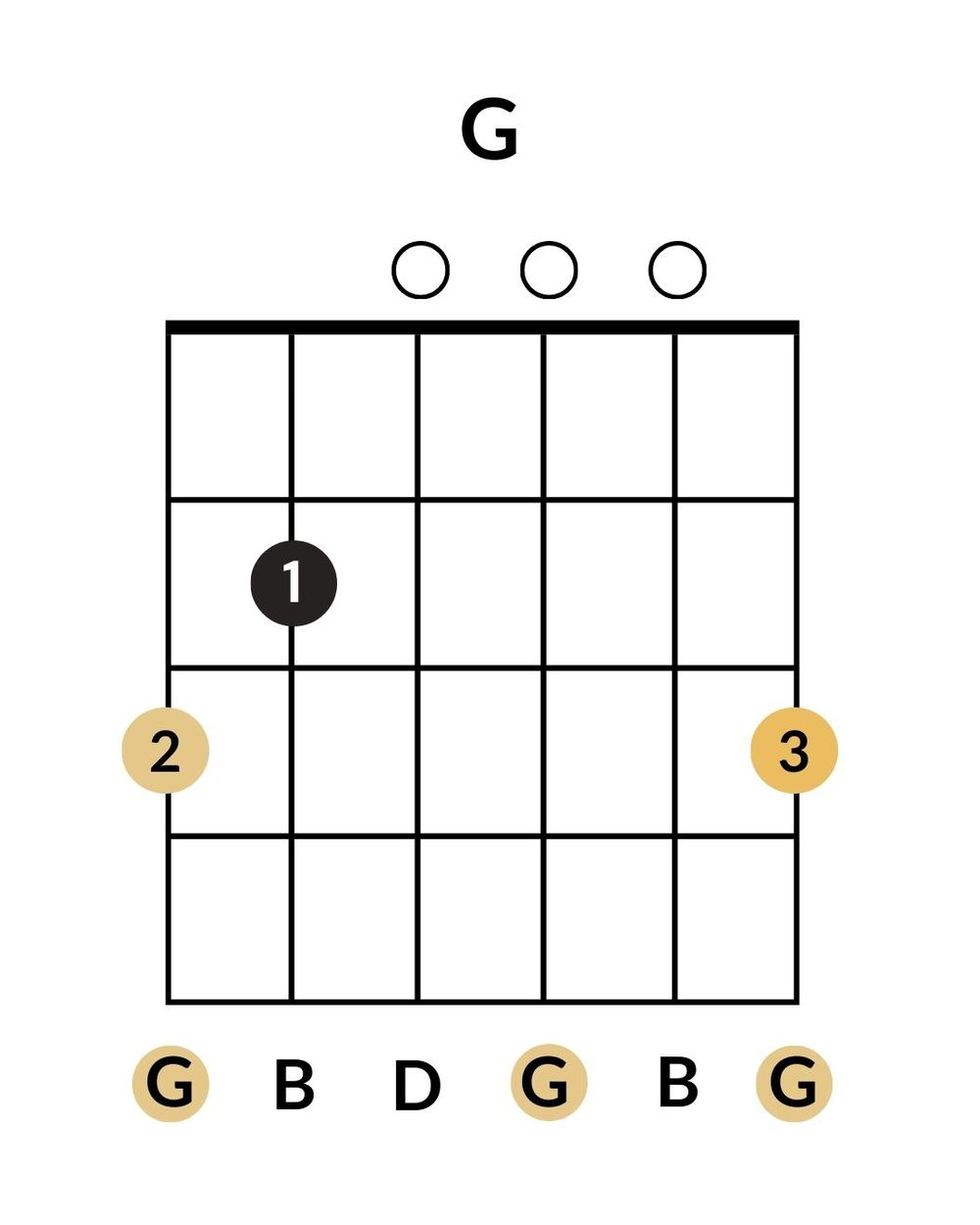
A bright, open-sounding chord you'll encounter in countless rock, pop, folk, and country songs.
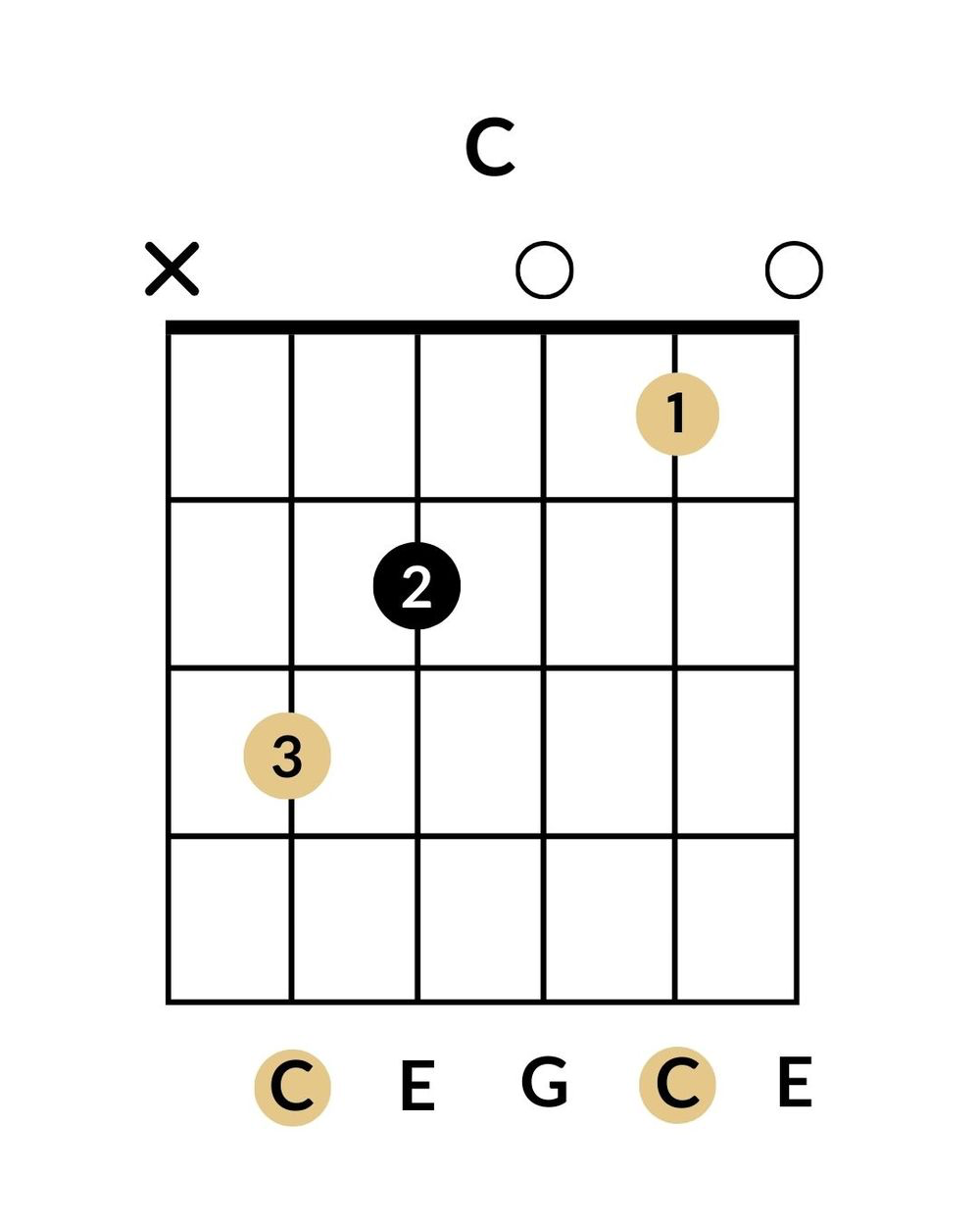
Another guitar essential. It may take a little more practice than Em, but it's worth the effort because you'll use it throughout your guitar journey.
If any of these chords still feel unfamiliar, spend a few minutes reviewing them in the Fretello Blog or practice them in Fretello App before continuing.
Your First Progression
Here's the progression we'll use today:
Em → G → C → G
Play each chord four times before moving to the next.
Count slowly:
1 – 2 – 3 – 4
Then change to the next chord.
Don't rush.
The goal isn't speed—it's giving your fingers enough time to find the correct position.
After playing through the entire progression, start again from Em.
Repeat it several times.
You'll probably notice something interesting…
It already sounds musical.
Your First Strumming Pattern
To keep things simple, use this beginner-friendly pattern:
↓↓↓↓
That's one downward strum on each beat.
Many beginners think they need complicated strumming patterns right away, but that's not true.
If you want to learn more about strumming patterns, visit our comprehensive guide we released in our Blog:
 Florian Lettner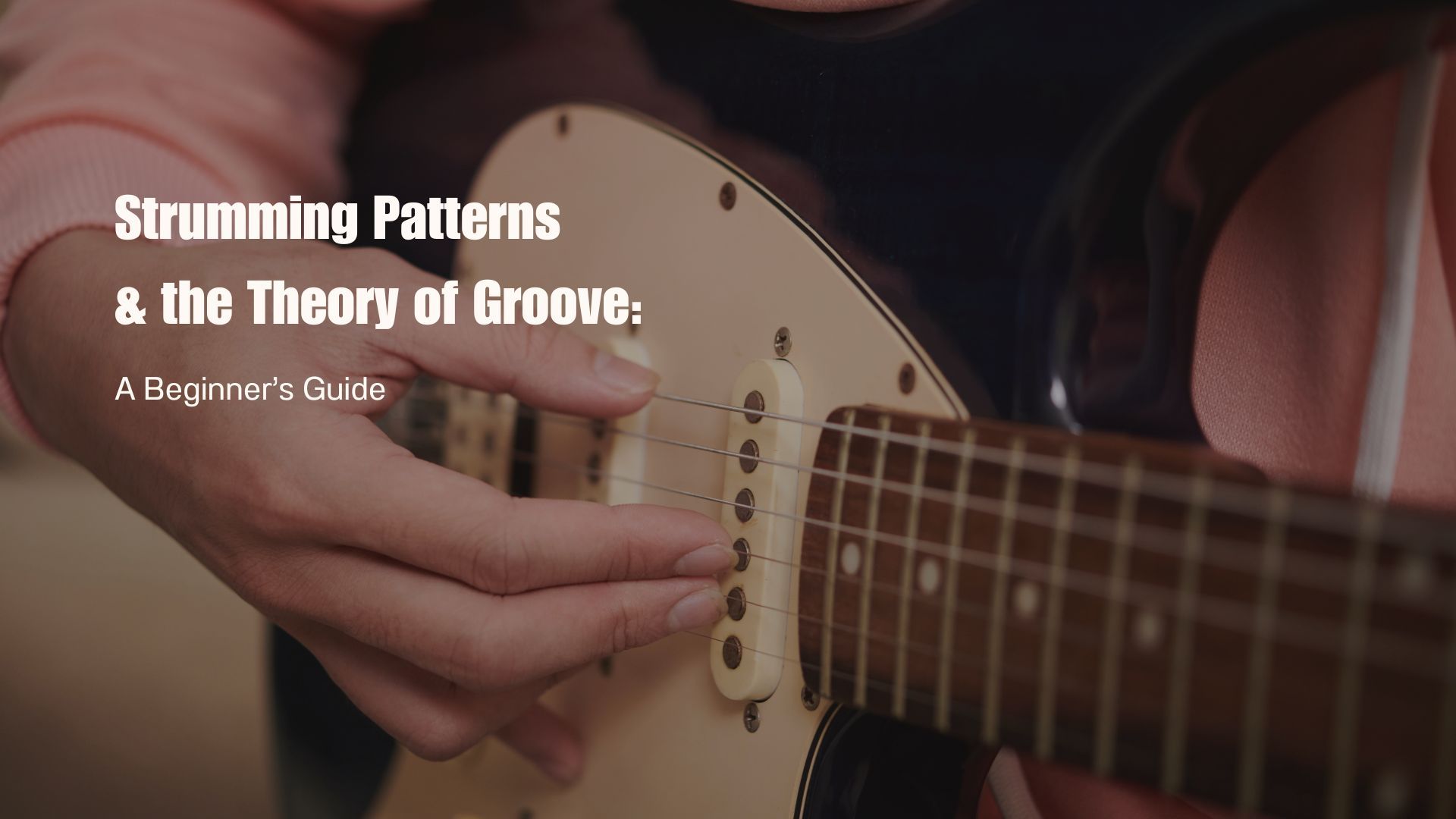
A steady rhythm is much more important than flashy movements. Professional guitarists spend years developing great timing because rhythm is what makes music feel good.
Once this pattern feels comfortable, you'll be ready to explore more interesting rhythms in the next lesson.
The Secret to Smooth Chord Changes
Switching between chords is one of the biggest challenges for beginners.
The good news?
Everyone struggles with it at first.
Here are a few tips that make the process easier:
Look Ahead
As you're finishing one chord, start thinking about the next one.
Your fingers will begin preparing for the move before you even lift them.
Move All Your Fingers Together
Instead of placing one finger at a time, try moving your whole hand as a unit.
It might feel awkward initially, but it quickly becomes more efficient.
Slow Down
If you're making mistakes, you're probably playing too fast.
Practice at a speed where every chord rings clearly. Once that feels easy, gradually increase your pace.
Remember: Slow is smooth, and smooth becomes fast.
Practice Challenge
Set aside 10 minutes today.
Play this progression:
Em → G → C → G
Repeat it at least five times.
Don't stop if you make a mistake. Simply continue to the next chord and keep the rhythm going.
If one transition feels particularly difficult, spend an extra minute practicing just those two chords before returning to the full progression.
You're Closer Than You Think
At the beginning of the week, you were learning how to place your fingers on individual chords.
Now you're connecting them into music.
That may seem like a small step, but it's actually a huge milestone. Every guitarist—from beginners to professionals—started exactly the same way.
The more often you play these three chords, the more natural they'll feel. Before long, your hands will know where to go without you having to think about it.
Up Next: Rhythm Brings Everything to Life
You've learned the chords.
You've learned a simple progression.
Next, we'll explore one of the most important skills every guitarist can develop: rhythm.
You'll discover why great timing matters more than playing fast, and you'll learn easy strumming techniques that will make your chord progression sound even more like a real song.
Until then, keep practicing—and enjoy hearing your guitar become more musical with every session.
Turn Practice into Progress
The more consistently you practice, the easier every chord change becomes. With Fretello, you'll always know what to practice next.
From your very first chords to complete songs, personalized lessons, real-time feedback, and bite-sized practice sessions help you make steady progress without feeling overwhelmed.