Have you ever watched an experienced guitarist and wondered how they make even the simplest chords sound so good?
The answer might surprise you.
It's not because they're playing fast. It's because they're playing in time.
For many beginners, speed feels like the ultimate goal. We want our fingers to move faster, switch chords instantly, and play songs at full tempo. But the truth is, rhythm is the foundation of every great performance.
If your timing is solid, even three simple chords can sound fantastic. If your timing is off, even the most advanced solo won't sound right.
Today, let's discover why rhythm matters—and how you can start developing it from your very first practice session.
What Is Rhythm?
Think of rhythm as the heartbeat of music.
Just as your heart keeps a steady pulse, rhythm keeps music moving forward.
Every song has a pulse, often called the beat. Whether you're listening to rock, pop, blues, or country, you'll notice that you can usually tap your foot or clap your hands along with it.
That steady pulse is what keeps musicians playing together.
Learn to Count the Beat
Most beginner songs use 4/4 time, which simply means there are four beats in each measure.
Count like this:
1 – 2 – 3 – 4
Then repeat.
That's it.
Before even picking up your guitar, try clapping your hands while counting aloud.
If you can keep a steady beat while clapping, you'll have a much easier time strumming consistently later.
Your First Strumming Exercise
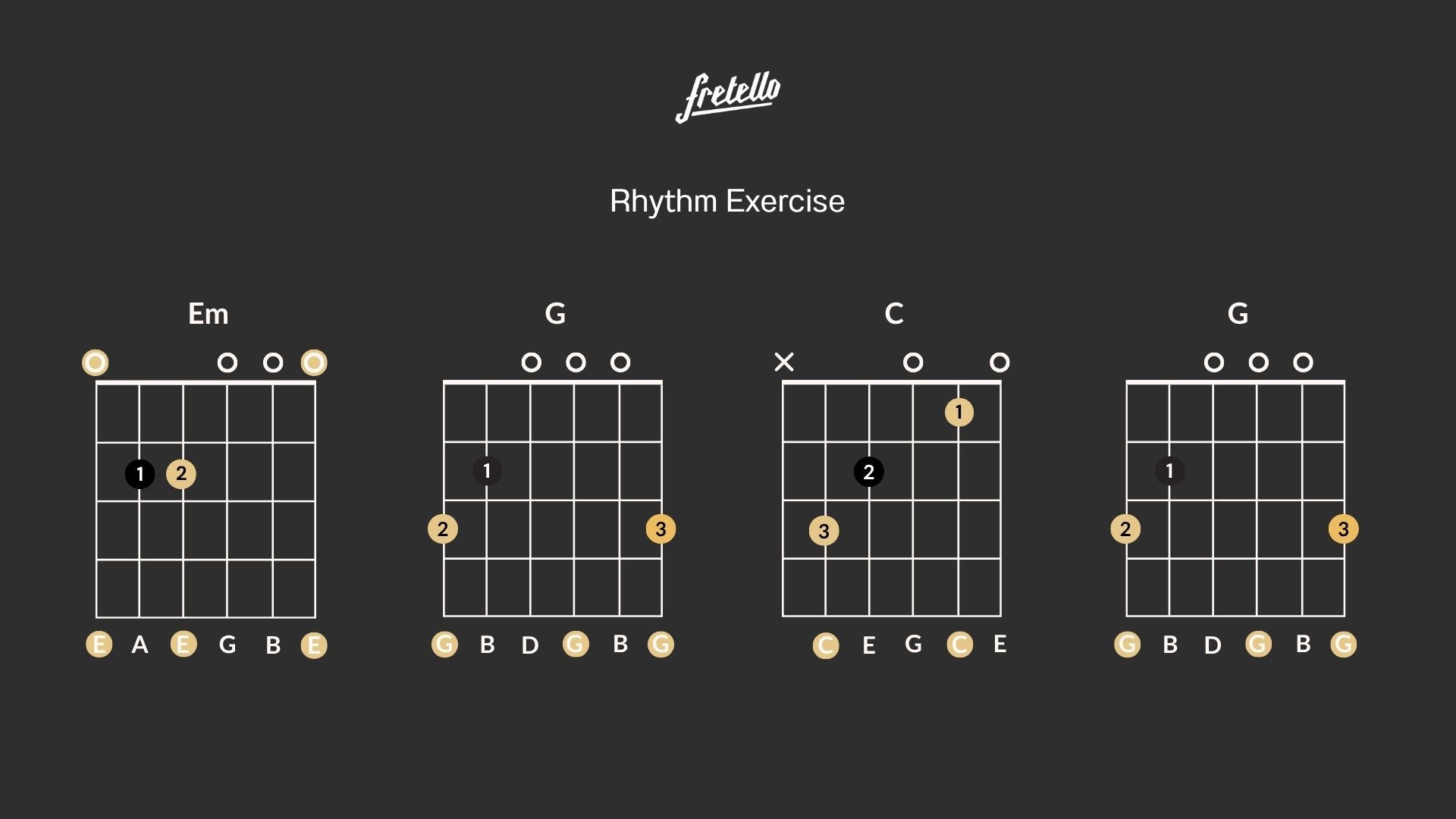
Let's return to the chord progression you learned in the last lesson:
Instead of worrying about fancy strumming patterns, keep it simple.
Play one downward strum on every beat.
Like this:
⬇️ 1
⬇️ 2
⬇️ 3
⬇️ 4
Then switch to the next chord.
You'll quickly notice that playing in a steady rhythm feels much more musical than rushing through the chords.
Why Beginners Speed Up
One of the most common mistakes is gradually playing faster without realizing it.
Why does it happen?
Usually because your hands become nervous when changing chords.
Instead of keeping the beat steady, you rush to get to the next chord.
Don't worry—everyone does this at first.
The solution is simple:
Slow down.
Playing slowly gives your brain enough time to coordinate both hands. Once your movements become automatic, speed will come naturally.
Practice with a Metronome
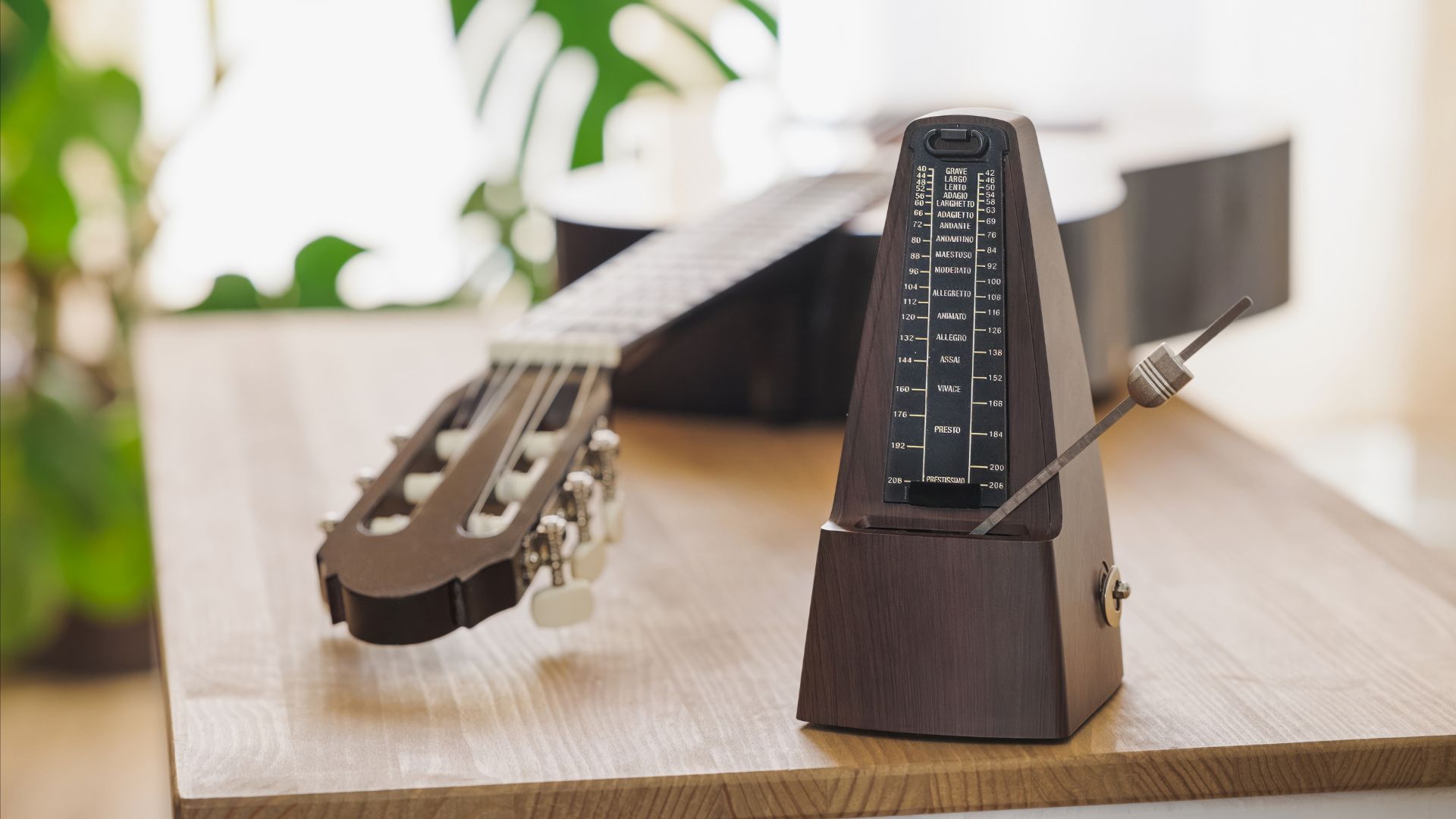
A metronome is one of the best practice tools you'll ever use.
It produces a steady click that helps you stay in time.
Start at around 60 beats per minute (BPM).
Strum once for every click.
At first, it might feel challenging. That's completely normal! After a few practice sessions, you'll notice your timing becoming steadier and your chord changes feeling more relaxed.
Try This Rhythm Challenge
Set a timer for 5 minutes.
Play your Em → G → C → G progression while counting aloud:
1 – 2 – 3 – 4
Your goal isn't speed.
Your goal is to make every beat equally spaced.
If you lose the rhythm, simply stop, take a breath, and begin again.
Progress comes from consistency—not perfection.
Why Rhythm Is More Important Than Speed
Imagine listening to your favorite song where the guitarist constantly speeds up and slows down.
It would feel uncomfortable, even if every note was technically correct.
Now imagine someone playing just three chords with perfect timing.
Which sounds better?
Most listeners would choose the second one.
That's because rhythm is what makes people want to tap their feet, nod their heads, or sing along.
It's the invisible glue that holds music together.
Keep the Beat Going
As you continue your guitar journey, you'll learn more exciting strumming patterns, fingerpicking techniques, and rhythms.
But every one of those skills starts with one simple habit:
Keeping a steady beat.
Master this now, and everything else becomes easier.
Next time, we'll build on today's lesson by learning a beginner-friendly strumming pattern that instantly makes your playing sound more dynamic.
Until then, don't chase speed—chase consistency.